Color Match Guide: A Comprehensive Overview (Updated 01/26/2026)
This guide details leveraging tools like Color Muse & Nix, alongside fan decks from Sherwin-Williams, PPG, and Benjamin Moore, for precise color replication and customer satisfaction.
Color matching is crucial for seamless projects, ensuring desired aesthetics across surfaces and brands. While seemingly simple, achieving accurate replication demands understanding tools – portable scanners like Color Muse and Nix, alongside manufacturer systems. However, reliance solely on proprietary tools proves limiting, often biased towards their own palettes. Successful matching blends technology with verification using physical fan decks, acknowledging lighting and texture impacts for optimal results.
Understanding Color Matching Tools
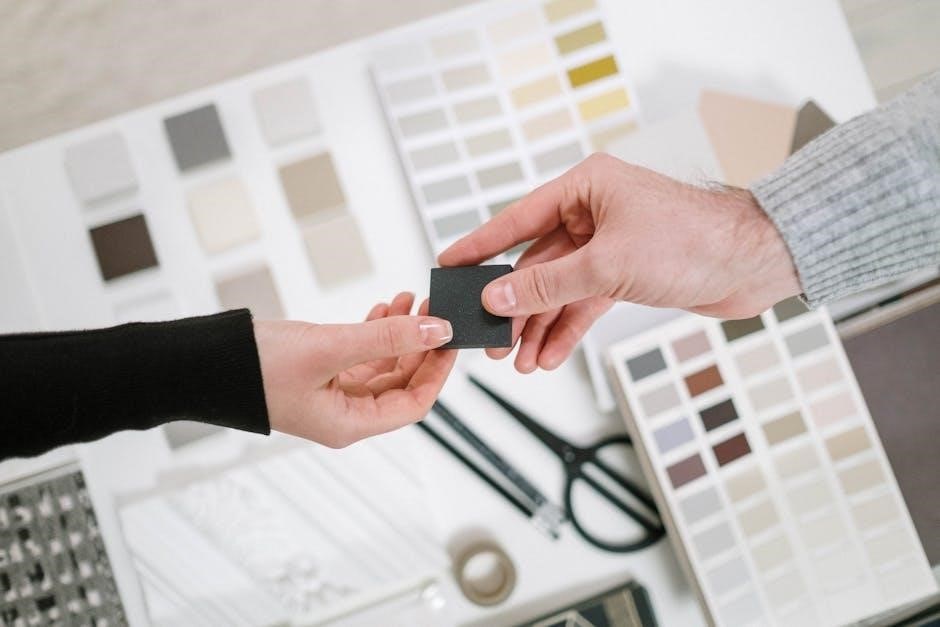
Portable color scanners, such as Color Muse and Nix, offer convenience and speed, providing digital color readings for replication. These devices are comparable in functionality, yet manufacturer-specific tools exist. However, these are often less reliable, programmed exclusively with their own color selections, hindering accurate matches across brands and limiting versatility;
Portable Color Scanners (Color Muse & Nix)
Color Muse and Nix devices are highly comparable, offering a quick digital color read. Always verify scanner results with manufacturer fan decks for accuracy. These scanners serve as excellent starting points, but aren’t foolproof; multiple scans on a surface are crucial for reliable color identification and matching success.
Manufacturer-Specific Color Matching Tools
These tools are generally less ideal, programmed solely with their own brand’s color palettes. They pinpoint the closest match within that brand, potentially failing to identify accurate equivalents from competitors. A Benjamin Moore tool, for instance, struggled to recognize a Benjamin Moore Aura color, highlighting their limitations.
The Limitations of Manufacturer Tools
Manufacturer tools exhibit inherent biases, prioritizing proprietary colors and restricting cross-brand matching capabilities. They often fail to accurately identify existing finishes, offering only approximations within their system. Relying solely on these tools can lead to inaccurate results and limit options for achieving desired color schemes.
Bias Towards Proprietary Colors
Manufacturer color matching tools are fundamentally designed to favor their own color palettes. The software is programmed with their specific fan decks, inevitably steering users towards their brand’s closest match, even if superior options exist elsewhere. This limits unbiased color selection and exploration.
Inability to Accurately Identify Existing Finishes
Manufacturer tools often struggle to discern the original paint’s sheen or finish. A color scan alone doesn’t reveal whether a surface is matte, eggshell, satin, or gloss. This crucial detail impacts the final match, leading to discrepancies and requiring additional adjustments for a truly accurate replication.
Best Practices for Accurate Color Matching
For optimal results, employ multiple scans across the surface area, accounting for variations. Always verify scanner readings with a comprehensive physical fan deck collection – Sherwin-Williams, PPG, Benjamin Moore, Valspar, and Coronado are essential. This dual approach ensures precision and minimizes potential errors.
Utilizing Multiple Scans on a Surface
Employing several scans across the same wall is crucial, as color can subtly shift due to lighting and texture. This technique helps identify the most representative color and increases the likelihood of finding an initial match within your extensive fan deck collection, ensuring accuracy.
Verification with Physical Fan Decks
Always confirm scanner readings with physical fan decks – Sherwin-Williams, PPG, Benjamin Moore, Valspar, and Coronado are essential. This step validates the digital match, accounting for nuances scanners might miss, and provides a tangible reference for customer approval, guaranteeing a successful color outcome.
Essential Fan Deck Collections
A comprehensive collection is vital; include Sherwin-Williams, PPG Voice of Color, Benjamin Moore (Collections, Classics, & Color Preview), Valspar, Clark+Kensington, and Coronado. These decks offer extensive color options, ensuring accurate matches beyond manufacturer limitations and providing customers with diverse choices for their projects.
Sherwin-Williams Fan Decks
Sherwin-Williams offers a vast range of fan decks, crucial for matching colors accurately. Their collections provide extensive palettes, from timeless classics to modern trends. Having these readily available allows for precise verification of scanner results and offers clients a broad spectrum of color possibilities for any space.
PPG Voice of Color Decks
PPG’s Voice of Color decks are essential for professionals seeking reliable color matches. These curated collections simplify the selection process, offering expertly coordinated palettes. Utilizing these alongside a color scanner ensures accurate results, providing customers with confidence in their final color choices and a harmonious aesthetic.
Benjamin Moore Collections & Classics
Benjamin Moore’s extensive range, including Collections and Classics, is crucial for comprehensive color matching. Having these fan decks alongside a scanner allows for verifying matches, especially when customers request existing Benjamin Moore Aura colors. This ensures accuracy and avoids reliance solely on potentially inaccurate manufacturer tools.
Valspar & Clark+Kensington Options
Including Valspar and Clark+Kensington fan decks expands matching capabilities, offering alternatives when customers present colors from these brands. These options are valuable for steering clients towards preferred brands, like Sherwin-Williams or Benjamin Moore, by accurately replicating the desired shade with superior quality paints.
Coronado Paint Color Swatches
Completing your fan deck collection with Coronado Paint swatches provides broader coverage for diverse customer requests. While less common, having Coronado options ensures you can confidently match a wider range of existing colors, demonstrating comprehensive service and minimizing the need for custom mixing delays.
Using Color Scanners as a Support Tool
Color scanners, like Color Muse or Nix, excel at quickly approximating colors, but shouldn’t be solely relied upon. They’re invaluable for confirming customer preferences or subtly guiding them towards preferred brands, offering a technical justification when an exact match proves elusive, streamlining the selection process.
Confirming Customer Preferences

Employing a color scanner allows for objective validation of a customer’s desired shade. If a client requests a specific color, scanning provides a tangible reference point, ensuring alignment between their vision and the final product. This builds trust and minimizes potential dissatisfaction with the chosen hue.
Guiding Customers Away from Less Desirable Brands
Color scanners offer a subtle yet effective way to steer customers towards preferred paint brands. By matching a customer’s chosen off-brand color to a higher-quality alternative, you can demonstrate superior results and potentially increase project value, all while maintaining color accuracy.
Benefits of Using Color Matching Technology
Employing color matching technology drastically improves speed and efficiency in color selection, minimizing customer wait times. It significantly reduces the need for creating numerous physical paint samples, saving both time and material costs, while offering a more streamlined and modern customer experience.
Speed and Efficiency in Color Selection
Color matching tools, like Color Muse and Nix, accelerate the process immensely, offering near-instantaneous color identification. This bypasses lengthy fan deck searches, allowing professionals to quickly pinpoint desired shades and provide prompt recommendations, ultimately enhancing project timelines and client satisfaction.
Reducing the Need for Physical Samples
Accurate color scanners significantly diminish reliance on costly and time-consuming physical paint samples. By digitally capturing color data, professionals can confidently suggest matches without extensive patch testing, minimizing waste and streamlining the selection process for both themselves and their valued customers.
Addressing Common Color Matching Challenges
Variations in lighting dramatically impact perceived color, necessitating careful consideration of the environment. Surface texture and sheen also play crucial roles; matte finishes absorb light differently than glossy ones, potentially altering scanner readings and requiring adjustments for accurate replication.
Variations in Lighting Conditions
Color perception shifts significantly under different light sources – sunlight, incandescent, or fluorescent. Metamerism, where colors appear to match under one light but differ under another, is a key challenge. Accurate matching demands accounting for the intended viewing environment to avoid unexpected color shifts post-application.
Impact of Surface Texture and Sheen
Surface texture and sheen dramatically influence how color is perceived. A glossy finish reflects more light, appearing brighter and potentially altering the scanned color reading. Matte surfaces absorb light, resulting in a different reading. Consider these factors when scanning and verifying matches with physical fan decks for accuracy.
Color Matching for Different Paint Brands
Achieving accurate matches across brands like Behr, Sherwin-Williams, and Benjamin Moore presents challenges. Manufacturer formulations vary, requiring careful verification. Scanning a Behr color and attempting replication in Sherwin-Williams or Benjamin Moore necessitates multiple scans and fan deck comparisons to compensate for these inherent differences.
Matching Behr Colors to Sherwin-Williams or Benjamin Moore
Successfully matching Behr colors to Sherwin-Williams or Benjamin Moore requires acknowledging formulation differences. Relying solely on scanner results is insufficient; always cross-reference with physical fan decks. Multiple scans on the Behr surface, coupled with careful fan deck verification, are crucial for a satisfactory result.
Achieving Accurate Matches Across Different Manufacturers
Cross-manufacturer color matching presents unique challenges due to varying pigment bases and resin systems. Manufacturer tools are biased, so prioritize portable scanners like Color Muse or Nix, then verify with comprehensive fan decks. Expect slight variations and communicate these possibilities to clients for realistic expectations.
Advanced Color Matching Techniques
Refining color matches involves layering images to analyze complex hues and adjusting for perceived mood and lighting in digital representations. This nuanced approach goes beyond simple scans, accounting for environmental factors impacting color perception and ensuring a truly accurate and aesthetically pleasing result.
Layering Images for Complex Color Analysis
Bringing multiple images together allows for a deeper understanding of a color’s subtleties, especially when dealing with intricate patterns or varying textures. This technique helps account for how light interacts with surfaces, providing a more comprehensive analysis than a single scan can offer, leading to superior matches.

Adjusting for Mood and Lighting in Digital Representations
Digital representations of color are heavily influenced by lighting conditions and intended mood. Software allows simulating different light sources – warm, cool, or neutral – and adjusting for desired ambiance. This ensures the matched color translates accurately across various environments, avoiding unexpected shifts in appearance.
Troubleshooting Color Matching Issues
Common challenges include metamerism – color shifts under different lighting – and scanner inaccuracies. Verify matches with physical fan decks, recalibrate scanners regularly, and address surface texture impacts. Recognizing these issues and employing verification steps are crucial for achieving consistently accurate color matches and client satisfaction.
Dealing with Metamerism (Color Shift Under Different Lights)
Metamerism occurs when colors appear identical under one light source but differ under another. To mitigate this, view samples under multiple lighting conditions – daylight, incandescent, and fluorescent. Utilizing a color scanner alongside physical fan decks helps identify and correct these perceptual discrepancies for accurate results.
Identifying and Correcting Scanner Errors
Regular calibration of color scanners is crucial for accuracy. Verify scanner readings against physical fan decks; discrepancies indicate potential errors. Ensure the scanner surface is clean and properly positioned. Multiple scans on the same surface can reveal inconsistencies, prompting recalibration or alternative matching methods.
The Future of Color Matching Technology
Expect seamless integration of color matching with digital design tools, streamlining workflows. AI-powered analysis will predict color outcomes based on lighting and mood, enhancing accuracy. Advanced algorithms will analyze complex images, offering nuanced color palettes and personalized recommendations for optimal aesthetic results.
Integration with Digital Design Tools
Future systems will directly link color scans to design software, instantly applying matched colors to virtual projects. This eliminates manual entry and reduces errors, fostering a fluid creative process. Designers can experiment with variations and visualize results in real-time, accelerating project completion and client approval.
AI-Powered Color Analysis and Prediction
Artificial intelligence will analyze scanned colors, predicting optimal formulations across different paint brands and finishes. AI can account for lighting and texture, offering more accurate matches than current methods. This technology will also suggest complementary colors, enhancing design possibilities and streamlining the selection process.
Maintaining Color Accuracy Over Time
Consistent color accuracy requires diligent fan deck storage, shielded from direct sunlight and humidity, to prevent fading. Regular calibration of color scanners – at least annually – is crucial. This ensures reliable readings and minimizes discrepancies. Documenting calibration dates and scanner settings is also highly recommended.
Proper Storage of Fan Decks
To preserve color integrity, store fan decks flat, away from direct sunlight and fluctuating temperatures. Protective cases are ideal, preventing edge wear and fading. Regularly inspect for damage and replace outdated decks. Proper organization by brand streamlines the matching process, ensuring accurate and consistent results over time.
Regular Calibration of Color Scanners
Consistent accuracy demands routine calibration of color scanners, typically every six to twelve months, or as recommended by the manufacturer. This process corrects for drift and ensures reliable readings. Utilize calibration tiles and follow provided software instructions meticulously to maintain optimal performance and minimize matching errors.
Resources for Color Matching Professionals
Elevate expertise through industry associations offering training programs and certifications. Online color communities and forums provide valuable peer-to-peer support and access to the latest techniques. Staying connected fosters continuous learning, ensuring professionals remain current with evolving color matching technologies and best practices.
Industry Associations and Training Programs
Dedicated associations offer specialized courses covering color theory, scanner calibration, and advanced matching techniques. These programs enhance skills in identifying subtle color nuances and addressing challenges like metamerism. Certification demonstrates a commitment to professional standards, boosting credibility and client confidence.
Online Color Communities and Forums
Numerous online platforms connect professionals, fostering knowledge sharing and problem-solving regarding color matching. These forums provide a space to discuss challenging scenarios, exchange tips on tool usage, and stay updated on emerging technologies. Active participation enhances expertise and expands your professional network.