The Nikon D60 offers a comprehensive user manual, readily available for free download and streaming online.
Guides, like those from Amazon and the Internet Archive, simplify setup and operation for all skill levels.
These resources unlock the camera’s full potential, from basic functions to advanced techniques.
What is the Nikon D60?
The Nikon D60 is a digital single-lens reflex (DSLR) camera designed for both beginner and intermediate photographers.
Its accompanying user manual serves as a vital resource, offering detailed instructions on every aspect of the camera’s functionality.
Available for free download from platforms like the Internet Archive, the manual guides users through initial setup, basic controls, and advanced features.
Guides, such as those published by Focal Press, further enhance understanding, providing a one-stop resource for mastering the D60’s capabilities.
Whether you’re starting or seeking to expand your photographic skills, the manual is your key to unlocking the D60’s potential.
Key Features and Specifications
The Nikon D60 user manual details a camera boasting a 24.2-megapixel DX-format CMOS sensor, delivering high-resolution images.
It features 11-point autofocus for accurate subject tracking and Full HD 1080p video recording at up to 60fps.
The manual explains the camera’s ISO range of 100-25600, enabling shooting in various lighting conditions.
Connectivity options, as outlined in the guide, include built-in Wi-Fi and Bluetooth for easy image transfer.
Resources like Amazon’s Focal Digital Camera Guides provide a comprehensive overview of these specifications and how to utilize them effectively.

Getting Started with Your Nikon D60
The Nikon D60 user manual provides a “quick start guide” for immediate operation, alongside detailed instructions for unboxing and initial setup procedures.
Begin your photographic journey with ease!
Unboxing and Initial Setup
Upon receiving your Nikon D60, the user manual guides you through a straightforward unboxing experience. Carefully inspect the contents, ensuring all components are present – the camera body, battery, charger, strap, and essential cables.
The manual then details the initial setup process, emphasizing the importance of registering your camera for warranty purposes.
It walks you through selecting your preferred language and region, customizing initial settings, and understanding the camera’s basic layout.
Following these steps ensures a smooth and personalized start to your photography adventure with the Nikon D60.
Inserting the Battery and Memory Card
The Nikon D60 user manual provides clear instructions for inserting both the battery and a compatible memory card. Locate the battery compartment door, typically on the bottom of the camera, and open it according to the manual’s guidance.
Insert the battery, ensuring correct polarity, until it clicks into place.
Next, find the memory card slot and gently insert a supported SD card until it locks.
The manual stresses the importance of using compatible cards and proper insertion to avoid damage and ensure reliable performance.
Basic Camera Controls and Buttons
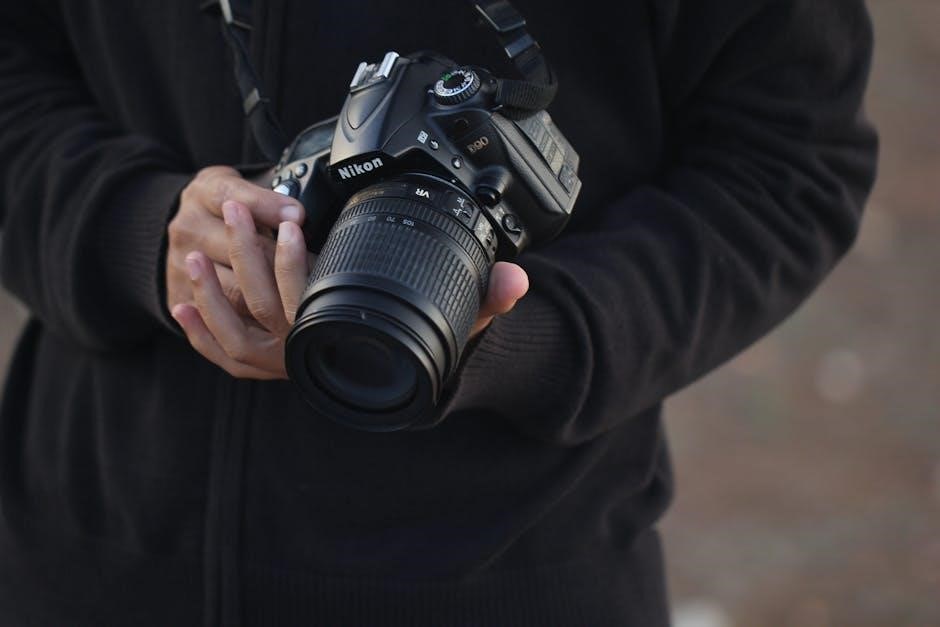
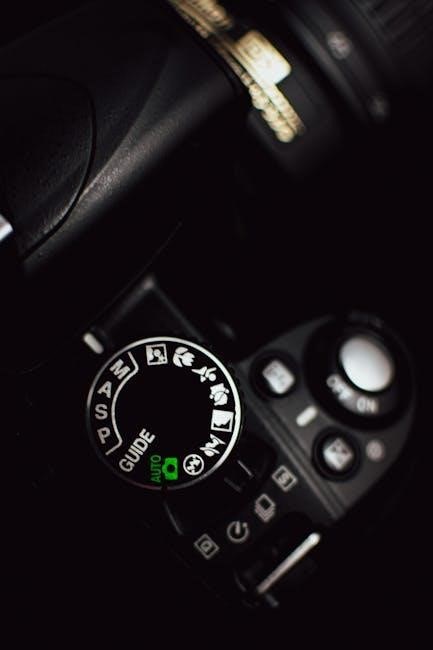
The Nikon D60 user manual details each control and button for intuitive operation. Key elements include the power switch, shutter button, mode dial (Auto, P, A, S, M), and directional pad for menu navigation.
The manual explains the function of the ‘i’ button for quick access to frequently used settings.
It also covers the control dial for adjusting settings like aperture and shutter speed, and the menu button for accessing the full range of camera options.
Understanding these basics unlocks creative control.
Understanding the Shooting Modes
The Nikon D60 manual explains various shooting modes – Auto, Program, Aperture-Priority, Shutter-Priority, and Manual – empowering users to control image capture.
Each mode offers different levels of creative flexibility.
Auto Mode for Beginners
Auto mode on the Nikon D60, as detailed in the user manual, is designed for simplicity, making it perfect for those new to DSLR photography. The camera automatically selects the optimal settings – aperture, shutter speed, ISO, and white balance – based on the scene.
This eliminates the need to understand complex photographic principles initially. The manual emphasizes that Auto mode prioritizes ease of use, allowing beginners to focus on composition and capturing the moment. While offering convenience, the manual also notes that exploring other modes unlocks greater creative control as skills develop. It’s a fantastic starting point for learning!
Program Auto (P) Mode
Program Auto (P) mode, explained in the Nikon D60’s user manual, offers a balance between automatic operation and creative control. Unlike full Auto mode, P mode allows photographers to adjust certain settings – like ISO, white balance, and exposure compensation – while the camera still selects the appropriate aperture and shutter speed for proper exposure.
The manual highlights this mode as a stepping stone for users wanting to move beyond fully automatic settings. It provides a degree of customization without the complexity of aperture-priority or shutter-priority modes, making it ideal for intermediate learners seeking more influence over their images.
Aperture-Priority (A) Mode
Aperture-Priority (A) mode, detailed within the Nikon D60 user manual, empowers photographers to control the camera’s aperture, influencing depth of field. The camera automatically selects the shutter speed to achieve correct exposure, based on the chosen aperture and lighting conditions.
The manual explains how wider apertures (lower f-numbers) create shallow depth of field, ideal for portraits, while narrower apertures (higher f-numbers) yield greater depth of field, suitable for landscapes. This mode is presented as a key step towards mastering exposure, offering creative control over image aesthetics while simplifying the technical aspects.
Shutter-Priority (S) Mode
Shutter-Priority (S) mode, as explained in the Nikon D60 user manual, allows photographers to dictate the shutter speed, controlling motion blur and freezing action. The camera then automatically adjusts the aperture to maintain proper exposure.
The manual details how faster shutter speeds are crucial for capturing fast-moving subjects, preventing blur, while slower shutter speeds can intentionally create motion blur for artistic effect. This mode is presented as a valuable tool for dynamic photography, offering control over how movement is rendered in images, simplifying aperture selection.
Manual (M) Mode
Manual (M) mode, detailed within the Nikon D60 user manual, grants the photographer complete control over both shutter speed and aperture. This mode bypasses the camera’s automatic settings, demanding a thorough understanding of exposure principles.
The manual emphasizes that mastering M mode requires practice, as users must independently balance these settings to achieve the desired image brightness and depth of field. It’s presented as the ultimate creative control, allowing for precise adjustments beyond what automatic modes offer, ideal for challenging lighting scenarios.

Focusing and Exposure
The Nikon D60 user manual details autofocus modes, exposure compensation, and metering.
Understanding these settings is crucial for achieving sharp, well-exposed images in various conditions.
Autofocus Modes and Settings
The Nikon D60 user manual thoroughly explains the camera’s autofocus (AF) system. It details Single-servo AF (AF-S) for stationary subjects, Continuous-servo AF (AF-C) for tracking moving subjects, and Auto-servo AF (AF-A) which automatically switches between the two.
The manual clarifies focus area modes – including Single-point AF, Dynamic-area AF (with 9, 21, or 39 focus points), and Auto-area AF.
Users learn how to select the appropriate AF point and customize AF sensitivity to optimize performance for different shooting scenarios. Understanding these settings is key to consistently capturing sharp images.
Understanding Exposure Compensation
The Nikon D60 user manual dedicates a section to exposure compensation, crucial for achieving correctly exposed images in challenging lighting. It explains how to override the camera’s automatic metering system when necessary.
The manual details using the exposure compensation dial (+/- EV) to brighten or darken images. Positive values increase brightness, while negative values decrease it.
Users learn to apply compensation in situations like backlit scenes or when photographing subjects significantly brighter or darker than the background, ensuring accurate and visually appealing results.
Metering Modes Explained
The Nikon D60 user manual thoroughly explains the camera’s three metering modes: Matrix, Center-weighted, and Spot. Understanding these is vital for accurate exposure.
Matrix metering analyzes the entire scene for balanced exposure, ideal for general photography. Center-weighted metering prioritizes the center of the frame, useful for portraits. Spot metering measures light from a very small area, perfect for tricky lighting situations.
The manual details how to select the appropriate mode based on the scene and desired effect, empowering users to take control of their camera’s light measurement process;
Navigating the Menu System
The Nikon D60’s user manual guides you through customizing settings, including date/time setup and image quality options.
It simplifies accessing and adjusting various camera functions for personalized control.
Customizing Menu Settings
The Nikon D60 user manual is essential for tailoring the camera to your preferences. It details how to navigate the menu system effectively, allowing for personalized adjustments. You can modify settings related to autofocus, metering, image quality, and more.
The manual explains each option clearly, ensuring you understand the impact of your changes. This customization empowers you to optimize the camera for specific shooting scenarios and achieve desired results. Explore the settings to fine-tune the D60’s performance and unlock its full creative potential, making it truly your own photographic tool.
Setting Up the Date and Time
The Nikon D60 user manual guides you through the simple process of setting the correct date and time on your camera. Accurate date and time stamping is crucial for organizing and archiving your photos and videos.
The manual provides step-by-step instructions for accessing the date/time settings within the camera’s menu system. It explains how to adjust the year, month, day, hour, and minute. Proper setup ensures your images are correctly labeled, facilitating easy sorting and retrieval later on, preserving your precious memories with accurate metadata.
Image Quality and Size Settings
The Nikon D60 user manual details the various image quality and size settings available, empowering you to tailor your photos to your specific needs. Understanding these options is vital for balancing file size and image detail.
The manual explains the differences between RAW and JPEG formats, outlining the benefits of each. It also clarifies how to select appropriate image sizes (Large, Medium, Small) based on intended use – printing versus web display. Choosing the right settings optimizes storage space and ensures the best possible image quality for your desired output.

Working with Images and Video
The Nikon D60 user manual guides you through viewing, deleting, and transferring images.
It also covers basic video recording settings, ensuring you can easily capture and share your memories.
Viewing and Deleting Images
The Nikon D60 user manual details how to efficiently review your captured photos directly on the camera’s LCD screen. You can zoom in to check focus and detail, and utilize the playback controls to navigate through your images.
The manual clearly explains the process for single image review, multi-image display options, and how to create slideshows for convenient viewing; Deleting unwanted images is straightforward, with options for deleting one image at a time or selecting multiple images for batch deletion.
Be sure to understand the confirmation prompts to avoid accidental deletions, and the manual will guide you through protecting important images from accidental removal.
Basic Video Recording Settings
The Nikon D60 user manual provides a detailed walkthrough of its video recording capabilities. It explains how to switch the camera to video mode and access the essential settings for capturing high-quality footage.
You’ll learn about selecting appropriate resolutions (like 720p or 1080p) and frame rates (24fps, 25fps, or 30fps) for different shooting scenarios. The manual clarifies how to adjust audio recording levels and choose between the built-in microphone and an external one.
Understanding the limitations of recording time and file size is crucial, and the manual offers guidance on optimizing these settings for your needs.
Transferring Images to a Computer
The Nikon D60 user manual details several methods for transferring your photos and videos to a computer. You can connect the camera directly using a USB cable, allowing it to appear as a removable drive on your system.
Alternatively, the manual explains how to utilize a compatible SD card reader for faster transfer speeds; It guides you through the process of selecting images for transfer and organizing them into folders.
The guide also touches upon software options, potentially including Nikon’s own software, for more advanced image management and editing capabilities on your computer.

Troubleshooting Common Issues
The Nikon D60 user manual assists with error messages, autofocus problems, and battery life concerns.
It provides solutions and guidance for common issues encountered during camera operation and usage.
Dealing with Error Messages
The Nikon D60 user manual is your first resource when encountering error messages. These messages indicate a problem requiring attention, ranging from minor inconveniences to potential hardware issues.
The manual details specific error codes and their meanings, offering troubleshooting steps to resolve them. Common errors might relate to the memory card, battery, or lens connection.
Often, simply restarting the camera or reseating the card/lens can resolve the issue. If the error persists, the manual guides you through more advanced solutions, and when professional repair might be necessary.
Understanding the error message is crucial for effective problem-solving, and the manual provides the necessary information.
Fixing Autofocus Problems
The Nikon D60 user manual provides detailed guidance on resolving autofocus issues. If images appear blurry, or the camera struggles to lock focus, consult the manual’s autofocus section.
It explains different autofocus modes and when to use them, ensuring the correct setting for your subject. Check that the lens is properly attached and clean, as obstructions can hinder autofocus performance.
The manual also covers autofocus-area modes, allowing you to select the area the camera uses to achieve focus. Experimenting with these settings can improve accuracy. If problems persist, the manual suggests checking for firmware updates.
Battery Life and Power Management
The Nikon D60 user manual details strategies for maximizing battery life. It explains that factors like LCD brightness, image review time, and flash usage significantly impact power consumption.
The manual recommends enabling battery saving features, such as reducing the LCD display time and turning off the camera when not in use. It also advises using a fully charged battery and storing spare batteries for extended shooting sessions.
Understanding the camera’s power modes – Normal, Standby, and Off – is crucial for efficient power management, as outlined in the manual.

Advanced Features and Techniques
The Nikon D60 user manual explores Picture Control settings, built-in flash options, and white balance adjustments for creative control and image quality.
Using Picture Control Settings
Picture Control settings on the Nikon D60, detailed within the user manual, allow photographers to customize the look of their images directly within the camera. These presets – Standard, Vivid, Neutral, Portrait, Landscape, Flat, and Monochrome – offer distinct color and contrast profiles.
The manual guides users through adjusting each setting’s sharpness, contrast, brightness, saturation, and hue. Experimenting with these parameters enables achieving desired aesthetics without post-processing. Users can also create and save custom Picture Controls tailored to specific shooting scenarios, ensuring consistent results and streamlining workflow. Understanding these settings unlocks creative potential.
Exploring the Built-in Flash
The Nikon D60’s built-in flash, explained in the user manual, provides supplemental lighting for various shooting situations. The manual details accessing flash settings through the camera’s menu, offering modes like Auto, Auto with Red-Eye Reduction, Fill-Flash, Slow Sync, and Manual.
Users learn to adjust flash exposure compensation for brighter or dimmer results. The guide clarifies when to utilize slow sync for balancing flash with ambient light, and how to disable the flash entirely for natural lighting. Understanding these options enhances image quality and creative control, especially in challenging lighting conditions.
Understanding White Balance
The Nikon D60’s user manual thoroughly explains white balance, crucial for accurate color rendition. It details various presets – Auto, Incandescent, Fluorescent, Direct Sunlight, Flash, Cloudy, and Shade – each optimized for specific lighting conditions.
The manual guides users through custom white balance settings, allowing precise color calibration using a white or gray card. Understanding how to adjust white balance corrects color casts, ensuring natural-looking images. Mastering this feature is vital for consistent results, particularly when shooting in mixed or artificial lighting environments, enhancing overall image quality.

Resources and Further Learning
Access the full Nikon D60 user manual online for detailed guidance. Explore repair manuals and supplemental guides for expanded knowledge and support.
Downloading the Full User Manual
Obtaining the complete Nikon D60 user manual is remarkably straightforward, thanks to readily available online resources. The Internet Archive provides free access, offering options for PDF download, single-page processed JP2 ZIP files, and even torrent downloads for the complete manual.
These resources ensure you can access the information in a format that suits your preferences and needs.
Downloading directly allows for offline access, making it a convenient reference during shoots or travels.
Furthermore, exploring the Nikon website itself may yield the latest version or supplemental documentation.
Repair Manual Availability
For those requiring in-depth technical information, the Nikon D60 service manual – essentially a repair manual – is also accessible online. Resources indicate it can be found as a free PDF download, alongside text file formats, offering detailed schematics and repair procedures.
This manual caters to experienced technicians or those comfortable with camera disassembly and repair.
It includes information on electrical connectors and component layouts, crucial for diagnosing and resolving complex issues.
However, attempting repairs without proper training can void warranties and potentially cause further damage.